July 17, 2026 | Posted by MICRO
One of the most common questions we hear from new mold inspectors is:
“Should I use a wet swab or a dry swab?”
The answer is simple:
Both are excellent sampling tools—but each is designed for different surfaces.
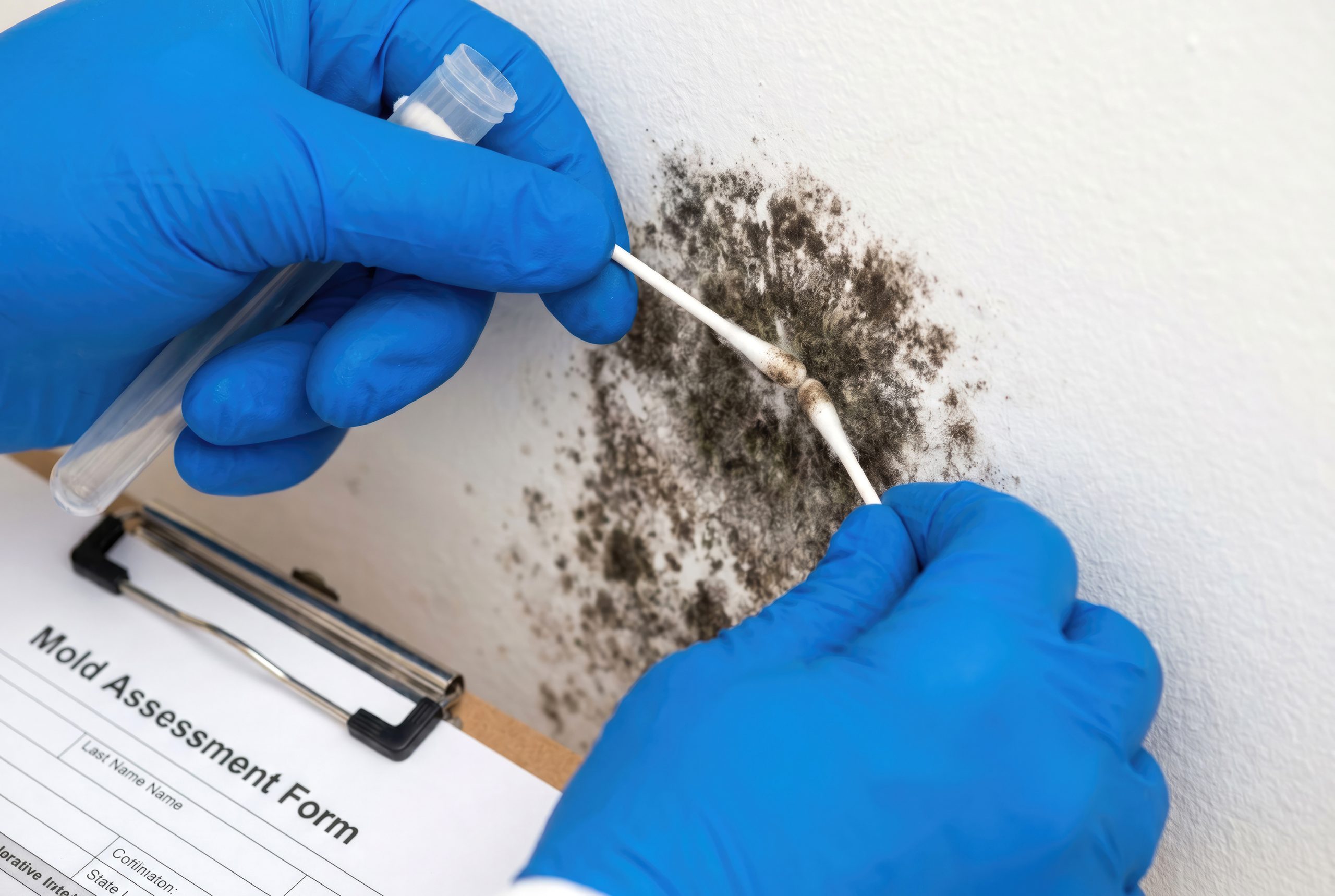
Using the proper swab can improve the quality of your sample, help your laboratory obtain more representative results, and provide your client with more reliable information. Knowing when to use each type of swab is an important part of becoming a professional mold inspector.
Surface sampling is commonly used to confirm suspected mold growth, document contamination before remediation, verify cleaning after remediation, investigate HVAC microbial growth, and support laboratory identification of fungal organisms. Choosing the right sampling media is one of the easiest ways to improve the quality of your inspection.
Why Surface Sampling Matters
Air sampling tells you what mold spores are suspended in the air at the time of testing.
Surface sampling answers a different question:
“What is actually growing on this material?”
Surface swabs are commonly used to:
- Confirm visible mold growth
- Identify mold on building materials
- Document contamination before remediation
- Verify post-remediation cleaning
- Investigate microbial growth on HVAC components
- Support laboratory identification of fungal organisms
Selecting the proper swab helps ensure that your laboratory receives the most representative sample possible.
What Is a Dry Swab?
A dry swab is a sterile sampling swab that contains no transport media or added moisture.
Dry swabs perform exceptionally well on dry, porous, or dusty building materials where mold spores are loosely attached to the surface.
Best Uses
- Attic roof sheathing
- Wood framing
- Drywall
- Crawlspace joists
- Insulation
- Dust accumulation
- HVAC supply registers
Advantages
- Excellent recovery of loose spores and fungal fragments
- Ideal for porous building materials
- Doesn’t dilute or smear the sample
- Longer shelf life
- Economical for routine inspections
👉 Shop Dry Sampling Swabs
What Is a Wet Swab?
Wet swabs are pre-moistened with a sterile transport solution that helps loosen mold spores and fungal fragments from smooth, non-porous surfaces.
The added moisture improves recovery when contaminants adhere tightly to the surface.
Best Uses
- Tile
- Glass
- Stainless steel
- Painted surfaces
- Plastic
- Countertops
- HVAC evaporator coils
- Metal duct components
Advantages
- Better recovery on smooth surfaces
- Excellent for HVAC inspections
- Collects thin microbial films
- Consistent sampling from hard materials
👉 Shop Wet Sampling Swabs: (Insert Product Link)
Which Swab Produces Better Laboratory Results?
One of the biggest misconceptions in the mold inspection industry is that one swab always produces better laboratory results than the other.
The truth is that the best swab depends on the surface being sampled.
For example:
- Dry swabs generally provide better recovery on wood framing, drywall, insulation, and other porous materials because loose spores remain undisturbed during collection.
- Wet swabs generally perform better on glass, tile, painted surfaces, stainless steel, and HVAC components because the moisture helps lift tightly adhered spores and fungal fragments.
The goal isn’t to collect the largest amount of material. The goal is to collect the most representative sample for laboratory analysis.
Professional Mold Inspectors Carry Both
Experienced inspectors rarely rely on only one type of swab. Instead, they carry both.
A complete mold inspection kit typically includes:
- Dry Sampling Swabs
- Wet Sampling Swabs
- Air-O-Cell® Spore Trap Cassettes
- Bio-Tape® Surface Sampling Slides
- Sampling Pump
- Moisture Meter
- Infrared Camera
Having the right equipment allows you to adapt to virtually every inspection situation and increases your confidence in the samples you collect.
A Simple Decision Guide
When deciding which swab to use, ask yourself one question:
Is the surface porous or smooth?
Choose a Dry Swab When:
- The surface is dry
- Mold growth is visible
- The material is porous
- Dust is present
- You’re sampling wood, drywall, framing, or insulation
Choose a Wet Swab When:
- The surface is smooth
- Contamination is tightly adhered
- You’re sampling tile, glass, stainless steel, painted surfaces, or plastic
- You’re inspecting HVAC evaporator coils
- Mold appears as a thin surface film
Following this simple guideline will improve your sampling technique and help provide better laboratory results.
Frequently Asked Questions
Can I use a wet swab on drywall?
You can, but dry swabs are generally preferred for dry, porous materials because they collect loose spores without introducing moisture.
Are wet swabs better than dry swabs?
Neither is universally better. Wet swabs are best for smooth, non-porous surfaces, while dry swabs are generally better for porous and dusty materials.
Should every mold inspector carry both types of swabs?
Yes. Carrying both allows you to select the proper sampling method based on the surface you’re inspecting.
What other sampling supplies should every mold inspector have?
In addition to wet and dry swabs, every professional mold inspector should carry Air-O-Cell® spore trap cassettes, Bio-Tape® surface sampling slides, a calibrated sampling pump, a moisture meter, and an infrared camera.
Shop Professional Mold Sampling Supplies
MICRO supplies professional mold inspectors throughout North America with the same sampling equipment used every day in residential, commercial, healthcare, educational, and industrial inspections.
Explore our complete selection of professional sampling supplies, including:
Whether you’re performing your first mold inspection or your thousandth, having the right tools helps you collect better samples and deliver more professional results.
Become a Certified Mold Inspector
Understanding how and when to use wet and dry sampling swabs is just one part of performing a professional mold inspection.
MICRO’s Certified Mold Inspector (CMI) program teaches inspectors how to properly evaluate moisture intrusion, collect representative samples, interpret laboratory reports, and conduct professional mold inspections with confidence.
Learn More About the Certified Mold Inspector (CMI) Program: (Insert CMI Course Link)
Find a Qualified Mold Inspector: https://findamoldexpert.com
Shop Professional Mold Sampling Supplies: Store – MICRO
Questions? Call MICRO at (888) 813-6653. We’re here to help.