What Are Mycotoxins? What Mold Professionals Should Know
About the Micro Blog
MICRO wants to keep you up to date with information pertinent to your interests on indoor air quality and specifically what's happening in the mold industry.
When you order the CMRC course or CMI/CMRC Package you get a free e-book How to Grow Your Restoration Business by Jack Dennison.
August 18, 2026 | Posted by MICRO
When mold professionals inspect a water-damaged building, they are dealing with more than what can be seen growing on drywall, wood, insulation, or other materials. Certain molds can produce chemical compounds known as mycotoxins under particular environmental conditions.
What Are Mycotoxins, Exactly?
The subject of mycotoxins can quickly become confusing. Terms such as toxic mold, black mold, mycotoxin exposure, and mycotoxin testing are sometimes used interchangeably, even though they do not mean the same thing.
For mold inspectors, assessors, remediators, and other indoor environmental professionals, understanding these distinctions is important. Professionals should know what mycotoxins are, how they relate to mold growth, what testing can and cannot establish, and why moisture investigation remains central to evaluating mold-contaminated buildings.
What Are Mycotoxins?
Mycotoxins are naturally occurring chemical compounds produced by certain species of fungi.
Not every mold produces mycotoxins. Even a mold species capable of producing a particular mycotoxin will not necessarily produce it every time it grows. Mycotoxin production can be influenced by environmental conditions, the fungal strain, available nutrients, moisture, temperature, and other factors.
This distinction is extremely important.
Finding a potentially mycotoxin-producing mold does not automatically prove that mycotoxins are being produced in that building.
Likewise, the appearance or color of mold cannot tell an inspector whether mycotoxins are present.
The U.S. Environmental Protection Agency (EPA) notes that more than 200 mycotoxins from common molds have been identified and that no one can determine whether a mold is producing mycotoxins simply by looking at it.
Mold Is Not the Same Thing as a Mycotoxin
One of the easiest ways to understand mycotoxins is to separate the organism from the substance it may produce.
Mold is a fungus. A mycotoxin is a chemical compound that certain fungi can produce.
Mold spores, fungal fragments, allergens, microbial compounds, and mycotoxins are therefore not interchangeable terms.
This matters when interpreting laboratory results.
A traditional mold sample may provide information about fungal spores or structures collected from air or surfaces. A laboratory test specifically designed to identify particular mycotoxins is looking for chemical compounds.
Those are different analytical questions.
Which Molds Can Produce Mycotoxins?
Several fungal genera include species capable of producing mycotoxins. Some of the most commonly discussed include:
Aspergillus
Penicillium
Fusarium
Stachybotrys
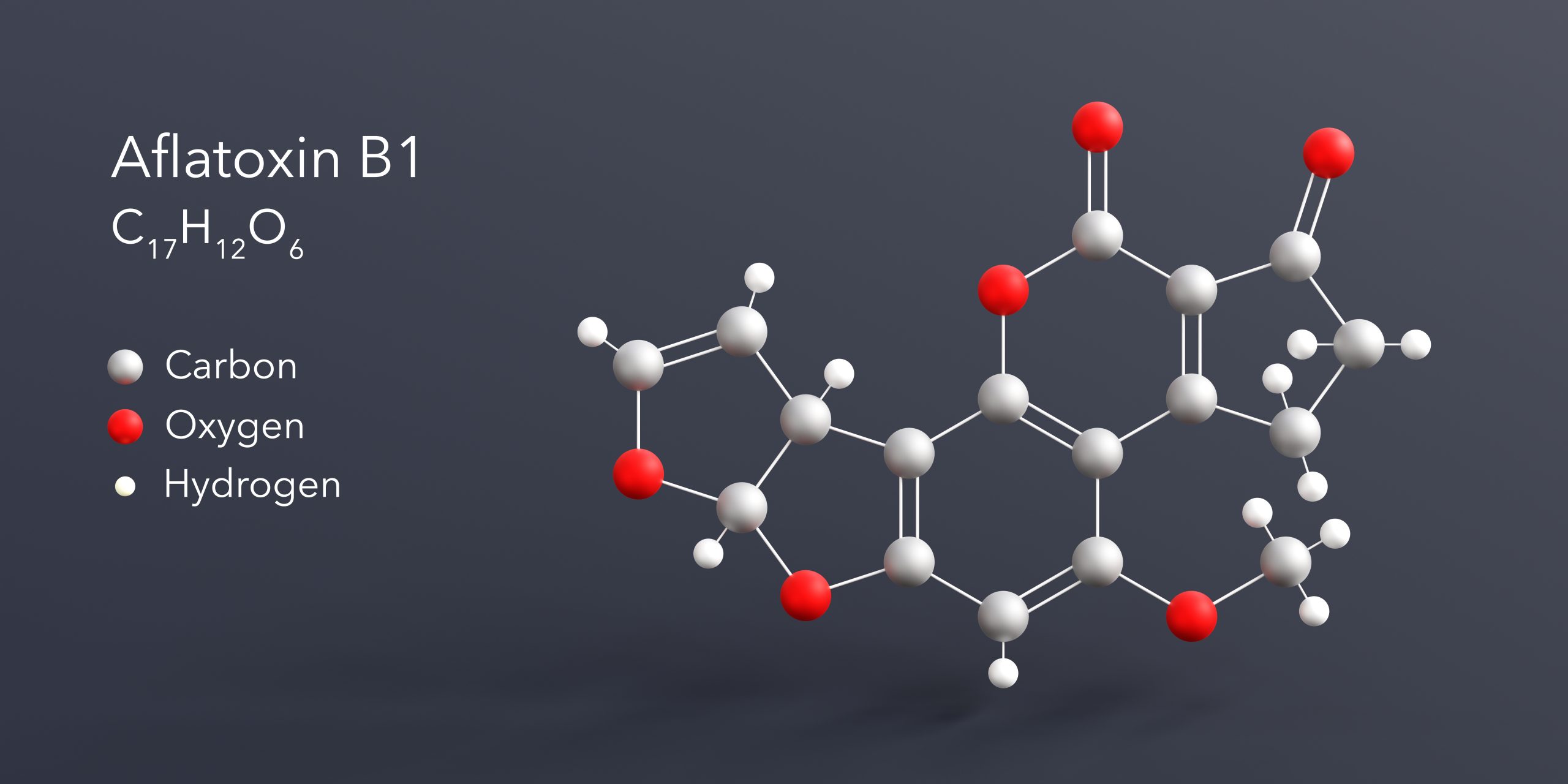
Examples of known mycotoxins include aflatoxins, ochratoxin A, fumonisins, trichothecenes, deoxynivalenol, patulin, and zearalenone.
However, professionals should be careful about drawing conclusions based solely on the genus or species identified in a mold sample.
The presence of a mold capable of producing a particular mycotoxin does not demonstrate that the toxin is present.
Are Mycotoxins Only an Indoor Air Quality Issue?
No.
In fact, some of the best-established concerns involving mycotoxins relate to food and agricultural products.
Certain fungi can contaminate grains, corn, peanuts, tree nuts, coffee, fruit, and other commodities while crops are growing or during storage. The U.S. Food and Drug Administration monitors several mycotoxins in the food supply, including aflatoxins, deoxynivalenol, fumonisins, patulin, ochratoxin A, T-2 and HT-2 toxins, and zearalenone.
The indoor-building environment presents a different exposure-assessment problem.
Some molds capable of producing mycotoxins can grow in moisture-damaged buildings, but determining whether occupants have been exposed to a particular mycotoxin—and determining the significance of that exposure—is considerably more complicated than simply identifying mold growth.
How Can People Be Exposed to Mycotoxins?
Potential routes of exposure include:
Ingestion
Inhalation
Skin contact
In the general population, food is a well-recognized potential source of mycotoxin exposure.
Indoor environmental professionals, however, are primarily concerned with whether fungal growth associated with moisture damage is present and whether occupants or workers could be exposed to mold spores, fungal fragments, allergens, irritants, or other fungal materials.
Professionals should avoid assuming that an individual’s symptoms establish either mold exposure or mycotoxin exposure.
Health diagnosis belongs to qualified healthcare professionals.
What Are the Health Effects of Mycotoxins?
This is an area where careful communication is particularly important.
Certain mycotoxins have well-established toxic effects at sufficient doses and through particular exposure routes. For example, aflatoxins in contaminated foods are recognized as a significant health concern, and FDA establishes action levels for aflatoxins in certain foods.
The scientific questions surrounding indoor environmental exposure to mycotoxins, however, can be much more complicated.
EPA states that some mycotoxins are known to affect people but that relatively little health information is available for many others and research continues.
Mold itself is also associated with recognized health concerns. According to EPA, molds can produce allergens and irritants, and exposure may cause allergic reactions in sensitive individuals. Mold can also trigger asthma attacks in people with asthma who are allergic to mold and may irritate the eyes, skin, nose, throat, and lungs.
For inspectors and remediators, the practical lesson is straightforward:
Do not diagnose medical conditions or make unsupported claims connecting a building condition to a particular illness.
Document the environmental conditions. Let qualified healthcare professionals evaluate medical conditions.
Can You Tell Whether Mold Is Producing Mycotoxins by Looking at It?
No.
This is one of the most important misconceptions professionals should correct.
The color of mold does not establish its toxicity.
Dark or black-colored mold is not automatically more dangerous than mold of another color, and a mold’s appearance cannot tell you whether it is producing mycotoxins.
Likewise, identifying Stachybotrys, Aspergillus, Penicillium, or another potentially toxin-producing fungus does not prove that mycotoxins are present.
Laboratory analysis designed for the compound in question would be necessary to establish whether a particular mycotoxin was detected in a particular sample.
What Is Mycotoxin Testing?
Mycotoxin testing attempts to identify or quantify specific fungal metabolites in a sample.
Depending on the objective and laboratory, analytical techniques may include methods such as:
Liquid chromatography
Mass spectrometry
LC-MS/MS
Immunoassay-based methods
Other validated analytical procedures
For example, FDA laboratories use sophisticated analytical methods, including liquid chromatography-tandem mass spectrometry (LC-MS/MS), for detecting multiple mycotoxins in food.
Testing a building environment, however, presents different questions.
A professional must first determine:
What question is the test supposed to answer?
A laboratory result without an appropriate sampling strategy and a defensible interpretation can create more confusion rather than less.
What Can a Positive Mycotoxin Test Tell You?
Generally, a positive environmental laboratory result can establish that the substance targeted by the analytical method was detected in the sample.
It does not automatically establish:
The source of the substance
When the exposure occurred
An individual’s exposure dose
Whether an occupant inhaled or ingested it
Whether it caused a particular symptom
Whether the building is medically unsafe
Whether a specific mold colony produced it
Whether remediation is necessary solely because of that laboratory result
Professionals need to distinguish between detection, exposure, and health effect.
Those are three different questions.
Is Mycotoxin Testing Always Necessary?
No.
The decision to conduct environmental testing should be based on the objective of the investigation and whether the result will meaningfully affect the professional’s conclusions or recommendations.
The same principle applies broadly to mold sampling.
EPA states that when visible mold growth is present, sampling is generally unnecessary. EPA also notes that there are no federal limits for airborne mold or mold spores that can be used to determine whether a building complies with a federal mold standard.
This reinforces an important concept for inspectors:
Testing should support an investigation—not replace one.
The Building Investigation Comes First
When investigating a suspected mold problem, laboratory testing is only one potential tool.
A competent investigation should focus heavily on identifying the conditions allowing fungal growth to occur.
That may include evaluating:
Visible microbial growth
Current and historical water intrusion
Plumbing leaks
Roof leaks
Foundation or groundwater intrusion
Condensation
Elevated humidity
HVAC conditions
Moisture content of building materials
Hidden cavities
Previous water damage
Previous remediation
Musty or unusual odors
Building-envelope defects
Finding and correcting the moisture source is critical because mold growth cannot continue without appropriate moisture conditions.
EPA summarizes this principle simply: the key to mold control is moisture control.
Mycotoxin Testing Should Not Replace Mold Assessment
A laboratory report can appear authoritative because it contains numbers, compound names, and detection limits.
But numbers must have context.
Professionals should consider questions such as:
Why was this location sampled?
Why was this sample type selected?
What compounds were included in the analysis?
What are the laboratory’s detection and reporting limits?
Was an appropriate control or comparison sample collected?
How representative is the sample?
Could other sources contribute to the result?
Is there an accepted exposure or interpretation criterion applicable to the result?
Will the result actually change the scope of work?
A test result should be interpreted within the context of the entire building investigation.
Mycotoxins and Mold Remediation
The presence of suspected mycotoxin-producing mold does not change one fundamental principle:
Unwanted indoor mold growth should be addressed and the underlying moisture problem corrected.
The objective of professional mold remediation is not to create a completely sterile building.
Instead, remediation generally focuses on correcting moisture problems, removing contaminated materials when appropriate, cleaning affected areas, controlling the spread of contamination, and returning the affected environment to an acceptable condition.
Appropriate containment, engineering controls, personal protective equipment, cleaning procedures, and post-remediation evaluation should be determined according to the conditions and scope of the project.
What Mold Professionals Should Tell Clients About “Toxic Mold”
Clients may use phrases such as:
“I think I have toxic mold.”
A professional response should avoid either dismissing the concern or confirming something that has not been established.
A better explanation is:
Some molds are capable of producing mycotoxins under certain conditions, but you cannot determine whether a mold is producing mycotoxins based on its color or appearance. The first priority is to determine whether mold growth and moisture problems are present and identify the source of those conditions.
That approach is factual, understandable, and within the appropriate role of an environmental professional.
Stay Within Your Professional Scope
Mold professionals should be particularly careful when conversations move from building conditions to medical conclusions.
Unless appropriately licensed or qualified to provide medical advice, an inspector or remediator should not diagnose an occupant, recommend medical treatment, or claim that a specific environmental finding caused an individual’s medical condition.
Instead, professionals can:
Document observed environmental conditions.
Explain laboratory findings within the limitations of the analytical method.
Identify moisture sources and conditions conducive to mold growth.
Recommend appropriate corrective actions within their professional scope.
Refer health-related questions to qualified healthcare professionals.
Clear boundaries protect the client and the professional.
Five Things Every Mold Professional Should Remember About Mycotoxins
1. Not every mold produces mycotoxins.
Only certain fungi have the ability to produce particular mycotoxins.
2. A potentially toxin-producing mold does not always produce toxins.
Environmental and biological conditions affect mycotoxin production.
3. You cannot identify mycotoxin production by looking at mold.
Color—including black coloration—is not proof of toxicity.
4. Detection does not automatically establish harmful exposure.
Finding a compound in a sample and establishing an individual’s exposure or health effect are separate scientific questions.
5. Moisture investigation remains fundamental.
Regardless of whether mycotoxin testing is performed, identifying and correcting moisture problems is essential to controlling indoor mold growth..