September 7, 2026 | Posted by MICRO
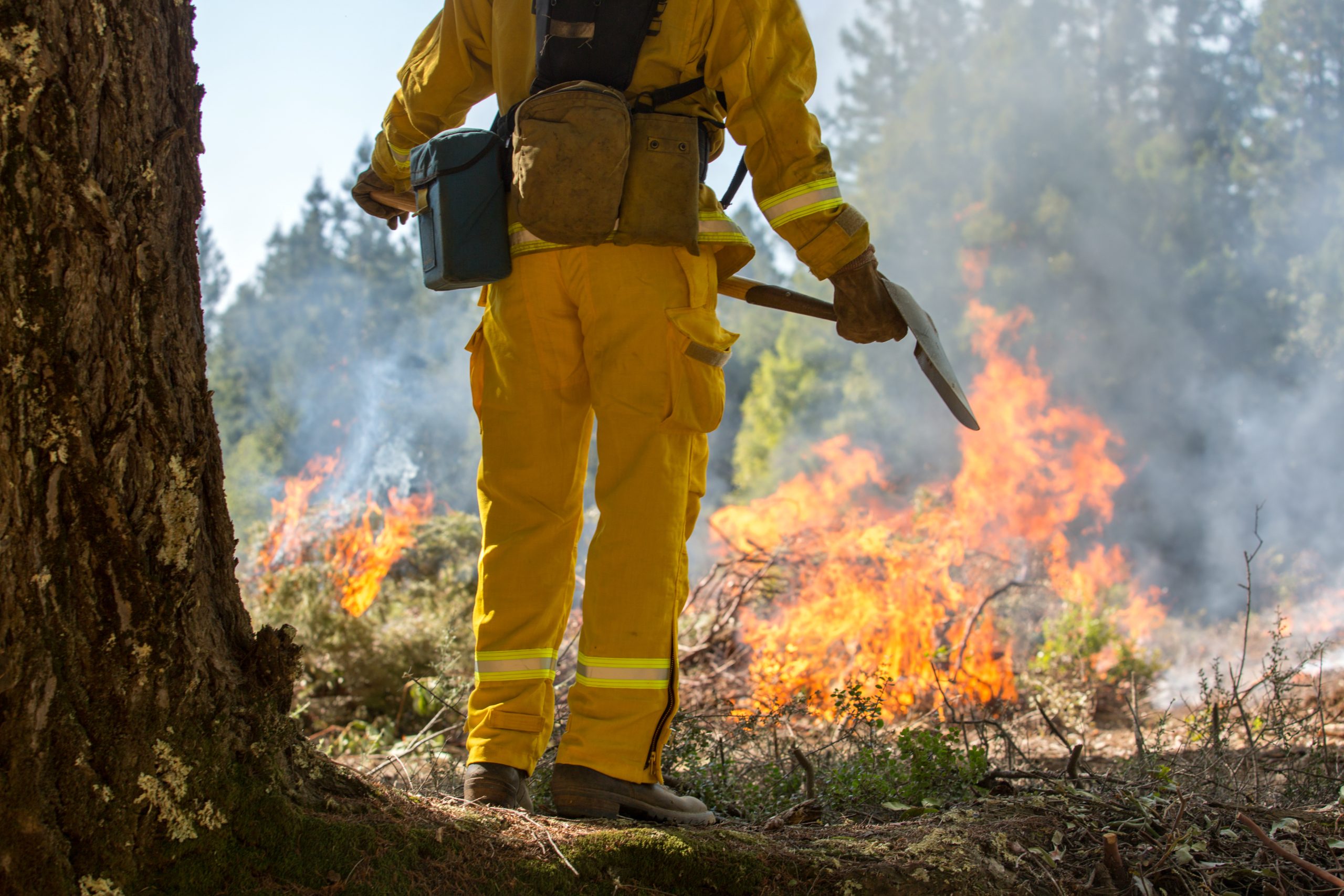
Wildfire smoke can clear from the air within hours—but the contaminants it leaves behind may continue affecting indoor air for days, weeks, or even longer.
When wildfire smoke enters a home or building, getting rid of the visible haze is only part of the problem. Smoke particles and gaseous contaminants can settle onto walls, floors, furnishings, fabrics, and other indoor surfaces. As the air begins to clear, some of those contaminants can be released back into the indoor environment.
For homeowners and indoor environmental professionals alike, understanding this process is important when evaluating a building after a significant wildfire smoke event.
Smoke Doesn’t Just Stay in the Air
Research published in Science Advances in 2023 demonstrated just how quickly smoke contaminants can move from indoor air onto surfaces.
Researchers introduced wood smoke into a test house and tracked what happened to the contaminants. Indoor surfaces initially acted as a reservoir, absorbing smoke-related compounds from the air. As airborne concentrations declined, however, those surfaces began releasing some of the compounds back into the air.
In some cases, that transition occurred within approximately 5 to 21 hours, with re-emission continuing for several days.
The researchers concluded that much of the volatile contaminant mass associated with smoke can ultimately reside on indoor surfaces rather than remaining suspended in the air.
That distinction matters.
Cleaning the air is important, but cleaning the air alone may not completely address a smoke-contaminated indoor environment.
Some Wildfire Contaminants Can Remain Much Longer
Other research suggests that certain wildfire-related contaminants can persist considerably longer.
A 2024 Environmental Science & Technology study conducted by researchers at Portland State University examined wildfire smoke contamination on common indoor materials, including glass and cotton fabric. Polycyclic aromatic hydrocarbons (PAHs) remained elevated on some surfaces for approximately 40 days after the smoke exposure ended.
This illustrates an important principle of indoor air quality:
Wildfire smoke is both an airborne contamination problem and a surface contamination problem.
Fine particles can be removed from the air through effective particle filtration. But smoke also contains gaseous compounds that require a different filtration mechanism—typically activated carbon or another adsorbent media.
For significant wildfire smoke conditions, an air purification system should ideally address both particles and gases.
Why Buildings Hold Onto Wildfire Smoke
Think of the porous materials inside a home—carpet, upholstery, bedding, drywall, clothing, curtains, and furnishings—as potential reservoirs.
During a smoke event, particles and gaseous contaminants can deposit on or be absorbed by these materials. Even after outdoor conditions improve and indoor air begins clearing, some accumulated compounds may migrate back into the indoor air.
Several conditions can affect this process.
Temperature and humidity matter. Warmer or more humid indoor conditions may increase the release of some stored compounds back into the air.
Smoke-loaded filters eventually lose effectiveness. Filters exposed to substantial smoke contamination may require replacement sooner than their normal service interval.
Ventilation can provide only temporary improvement. In the Science Advances test house, ventilation substantially reduced concentrations of certain smoke-related gases. After the windows were closed, however, concentrations increased again as contaminants stored on indoor surfaces were released back into the air.
This helps explain why a building can sometimes develop a noticeable smoke odor again even after it appeared that the problem had been resolved.
Why Wildfire Smoke Is an Indoor Air Quality Concern
The concern isn’t simply the smell of smoke.
One of the most important components of wildfire smoke is PM2.5—fine particulate matter measuring 2.5 micrometers or smaller.
According to the U.S. Environmental Protection Agency (EPA), particles of this size can travel deep into the lungs, and some may enter the bloodstream. Exposure to particle pollution has been associated with cardiovascular and respiratory effects, including aggravated asthma and decreased lung function.
Children, older adults, and people with existing heart or lung conditions may be particularly susceptible.
And because Americans spend approximately 90% of their time indoors, controlling indoor exposure becomes especially important when outdoor air quality deteriorates.
How to Remove Wildfire Smoke From a Home
At MICRO, we recommend thinking about wildfire smoke mitigation as a two-part process: clean the air and clean the contaminated surfaces.
Neither should be viewed as a substitute for the other.
1. Continuously Filter the Indoor Air
Wildfire smoke contains both fine particles and gaseous contaminants, so filtration should address both.
HEPA filtration
A high-efficiency particulate air (HEPA) filter is designed to capture extremely small airborne particles.
During wildfire conditions, properly sized portable HEPA air cleaners can help reduce indoor concentrations of smoke-related particulate matter. The EPA recommends operating portable air cleaners as continuously as practical during smoke events.
Activated carbon
HEPA filtration addresses particles, but it does not provide the same function as activated carbon for gaseous contaminants and odors.
Activated carbon works through adsorption, allowing certain gases and chemical compounds to adhere to the carbon’s extensive internal surface area.
For wildfire smoke applications, MICRO recommends considering purification equipment that combines substantial particle filtration with meaningful activated-carbon capacity rather than relying exclusively on a particle filter.
2. Clean Contaminated Surfaces
Air purification cannot remove contaminants that have already deposited onto furnishings and building surfaces.
After outdoor smoke conditions have improved, appropriate cleaning may include:
- HEPA vacuuming floors and other appropriate surfaces.
- Damp wiping and mopping hard surfaces.
- Laundering washable bedding, curtains, clothing, and other fabrics.
- Cleaning windows and other nonporous surfaces.
- Following appropriate personal protective practices when cleaning areas with significant smoke residue.
Research reinforces the value of this approach. In the Portland State study, laundering removed approximately 80% of measured PAHs from contaminated cotton, while cleaning contaminated glass removed substantial amounts of accumulated PAHs.
The objective is straightforward: remove contaminants from their indoor reservoirs rather than allowing them to remain available for redistribution into the air.
3. Inspect and Replace Smoke-Loaded Filters
A major wildfire event can place an unusually heavy contaminant load on air purifier and HVAC filters.
Don’t automatically assume that a filter should remain in service until its normal scheduled replacement date.
After substantial smoke exposure, inspect filters and follow the equipment manufacturer’s recommendations regarding replacement. Activated-carbon media that has become saturated will also become less effective at adsorbing additional gaseous contaminants.
4. Ventilate When Outdoor Air Quality Allows
Ventilation can be extremely helpful—but only when the outdoor air is cleaner than the indoor air.
Before opening windows and doors following a wildfire smoke event, check the local Air Quality Index (AQI).
When outdoor conditions are favorable, ventilation can help flush accumulated contaminants from the building. When wildfire smoke returns or outdoor PM2.5 levels rise, windows and doors should generally remain closed.
During those periods, reducing indoor particle-generating activities is also important.
5. Consider Creating a Clean-Air Room
During prolonged wildfire smoke events, it may not be practical to maintain ideal air quality throughout an entire building.
The EPA recommends considering a designated clean-air room—typically a room that can be isolated reasonably well from outdoor air infiltration.
A properly sized portable air purifier can be operated continuously in that room to provide an area with reduced airborne particle concentrations, particularly for individuals who may be more vulnerable to wildfire smoke exposure.
Why MICRO Offers Austin Air Purification Systems
At MICRO, our work has always centered on helping professionals and consumers better understand and address indoor environmental conditions.
That is why we’ve added Austin Air Systems to the professional products available through MICRO.
Austin Air has manufactured air purification systems in Buffalo, New York, for more than 35 years. What particularly interests us from an indoor air quality standpoint is the company’s combination of high-efficiency particle filtration and substantial activated-carbon filtration.
Many consumer air cleaners focus primarily on particulate filtration. For wildfire smoke, that addresses only part of the challenge.
Two Austin Air systems particularly relevant to wildfire smoke applications are the HealthMate Plus and Immunity Machine.
Austin Air HealthMate Plus
The HealthMate Plus uses a multi-stage filtration system designed to address both airborne particles and gases. Its combination of HEPA filtration and activated carbon makes it particularly relevant for environments affected by smoke, odors, VOCs, and other airborne contaminants.
Austin Air Immunity Machine
The Immunity Machine provides multiple stages of filtration designed to address a broad range of airborne particles and gaseous contaminants. It is another option for homes and indoor environments where comprehensive air cleaning is the objective.
For wildfire smoke, the important distinction isn’t simply whether an air purifier contains a HEPA filter.
It’s whether the system is capable of addressing both major components of smoke: fine particulate matter and gaseous contaminants.
The MICRO Bottom Line
Wildfire smoke doesn’t necessarily disappear when the sky clears—or when you can no longer smell smoke inside the house.
Smoke-related particles and chemical compounds can accumulate on indoor surfaces and furnishings and, under certain conditions, be released back into the indoor air.
An effective post-wildfire strategy therefore involves more than simply opening the windows.
Clean the air. Clean the surfaces. Replace heavily contaminated filters. Ventilate when outdoor conditions permit. And use filtration capable of addressing both particles and gases.
For homes in wildfire-prone regions, having an appropriately sized air purification system available before smoke arrives can also make it much easier to establish and maintain cleaner indoor air during an event.
MICRO now offers Austin Air purification systems as part of our expanding selection of professional indoor air quality and environmental products.
Explore Austin Air Purification Systems at MICRO →
References
- U.S. Environmental Protection Agency. Indoor Air Quality: What Are the Trends in Indoor Air Quality and Their Effects on Human Health?
- U.S. Environmental Protection Agency. Wildfires and Indoor Air Quality.
- Research examining portable HEPA filtration and indoor PM2.5 concentrations during wildfire smoke events.
- Science Advances (2023). Research examining the persistence, surface uptake, and re-emission of wood-smoke contaminants in a residential test environment.
- Environmental Science & Technology (2024). Portland State University research examining wildfire smoke PAH persistence and cleaning of indoor materials.
- U.S. Environmental Protection Agency. Particulate Matter (PM) Basics.
- U.S. Environmental Protection Agency. Guidance regarding HEPA filtration and particle removal.